Blog · northern Tenerife
Tenerife in October and November: why the north wins in autumn
Almost everyone who writes to us in August asking about October says the same thing: «the weather will be worse, I suppose, but at least there'll be fewer people». Both halves of that sentence are wrong for northern Tenerife, and there is official data to prove it. We live in the Orotava Valley and we have watched a good many autumns go by from here. This is what you gain and what you lose by coming in October or November.
There is twice as much cloud in August as in October
The low grey lid that settles over the north and blots out the sun — locals call it the panza de burro, the donkey's belly — has a reputation as an autumn thing. It is the other way round. The official AEMET weather station in the north of the island, at 632 m, records an average of 10.7 foggy days in July and 9.5 in August, against 5.1 in October and 5.3 in November. High summer has roughly double.
This is not one station's quirk. A study of 7,306 weather balloons launched from Tenerife over ten years reached the same conclusion by a different route: the temperature inversion that manufactures that cloud layer shows up on 97 % of August days and drops as low as 800 m in July, while from November to February it appears on fewer than 85 % of days and sits higher up. The lid is low and firm in summer; in autumn it rises and fails more often.
For anyone sleeping in the valley that means something concrete: you are likelier to wake up to a clear view of Mount Teide in October than in August.
The sea is warmer in October than in August
Water takes months to warm up, so its best moment does not coincide with the air's. Using the daily series published by Puertos del Estado for Canary waters since 2005, the October average is 23.7 °C and November's is 22.6 °C. August sits at 23.2 °C and July at 22.3 °C.
In other words: the November sea is milder than July's, and October beats August outright. The record for the whole series, above 25 °C, was also set on a 7 October. If you are coming to swim, autumn is not a consolation prize.
And there are more visitors than in summer, not fewer
This is the part that surprises everyone. According to arrivals to Tenerife published by the Canary Institute of Statistics, 618,578 tourists landed on the island in August 2025, 631,662 in October and 659,656 in November. October brings 2 % more visitors than August, and November 7 % more. The yearly peak is January.
Tenerife's low season is the summer. Every Mediterranean resort has August sunshine; what this island offers in November nowhere else in Europe does. What does change is who turns up. In November nine out of ten visitors are foreign, the German share rises from 12 % to 19 %, and fewer than half arrive on a package. You see fewer families with young children and more couples and hikers.
So if your plan was to come in autumn and have the island to yourself, adjust the expectation and book as far ahead as you would in summer.
What you do lose: sunshine hours and long evenings
There is no good news to offer here. That same northern station records 269 hours of sunshine in August, 194 in October and 155 in November — nearly 30 % less sun in October and 42 % less in November.
Then there is the clock change, which in the Canaries happens overnight on the last Sunday of October: in 2026, from Saturday the 24th to Sunday the 25th. On the Saturday the sun sets at 19:28; on the Sunday, at 18:27. A full hour of evening gone overnight. From then on it gets dark earlier and earlier, bottoming out at around 18:09 in late November.
Even so there is more daylight here than almost anywhere in Europe: the shortest day of the year lasts ten hours and twenty minutes. But if your plan involves a long hike, November means a genuinely early start.
And it rains. In November, a fair bit
The north is green because it rains, and autumn is when it starts. The northern station collects an average of 47 mm in October and 81 mm in November, against 5 and 6 mm in August and July. November is the second wettest month of the year, behind only December.
In days: 6.5 with measurable rain in October and 8.3 in November, so in November it rains on roughly one day in four. It is rarely a full day of it — usually showers that open and close — but bring a windproof layer and have a plan B.
The south of the island, forty minutes away, stays dry: the south-east coast gets 19 mm in October and 34 mm in November. If you need guaranteed sunshine, that is where it is. What you will not find there is the green valley.
- October: average high 22.5 °C, low 15.2 °C · 47 mm of rain over 6.5 days · 194 hours of sunshine.
- November: average high 19.6 °C, low 13.3 °C · 81 mm over 8.3 days · 155 hours of sunshine.
- August, for comparison: high of 25.7 °C · 5 mm of rain · 269 hours of sunshine · 9.5 foggy days.
- These come from the official station at 632 m. Down in the valley it usually runs about a degree warmer.
What only happens in autumn: the new wine
This appears in no weather forecast and it is the strongest argument for the season. The Orotava Valley has been a Denominación de Origen since 1994, with some 700 hectares of vineyard spread across La Orotava, Los Realejos and Puerto de la Cruz, and a training system of its own — the cordón trenzado, or braided cord — that exists nowhere else in the world.
The Regulatory Council places the harvest between late August and late October. When it ends comes San Andrés, in the last days of November, when the year's wine is uncorked in public. Icod de los Vinos holds the Tablas de San Andrés, with the official uncorking and the wine festival. La Orotava puts on an open-air evening of tapas with roast chestnuts and wine from the local bodegas, timed with the Christmas lights switch-on. Dates are published each year, so ask us and we will tell you how they fall.
On guachinches it pays to be precise, because a lot of invented information circulates. The rule that governs them, Decree 83/2013, sets no opening month at all: it says they may not open for more than four months a year and must close as soon as their own harvest wine runs out. What ties the guachinche to autumn is not the calendar — it is that the wine appears when the harvest ends. We ask around the area before you arrive and tell you which ones are open.
Mount Teide in October and November
Up top the pattern reverses. The summit is spotless in summer and cloudy in autumn: the AEMET station at 2,369 m records 0.4 foggy days in July and 11.2 in October. If you are coming for the stars in November, expect at least one night with nothing to see.
No real snow yet. At that same altitude the average is 0.2 snow days in October and 0.6 in November; the proper snow arrives between December and March. Frost is another matter — nearly four days on average in November, with highs of 11 °C and lows of 4.5 °C. Dress warm even if you are in shirtsleeves down in the valley.
And watch the cable car timetable, which shortens in exactly these weeks. Until 13 October it runs 9:00 to 18:00; from the 14th to the 24th, until 17:30; and from 25 October, 9:00 to 17:00, with the last ascent at 16:00. A return ticket costs 42 € for non-residents and is sold online only. Setting foot on the summit itself also requires a separate permit, which we cover in our guide to the Teide permit.
So: October or November?
If you can choose, October. Three degrees warmer, half November's rain, forty more hours of sunshine and the sea at its best point of the year. The first fortnight still has the long evenings, too.
November is for people coming for something else: the new wine, San Andrés, the chestnuts and a valley at its greenest. You pay for it in rain and in darkness at six. In exchange, it is the time of year when this place is most like itself.
And if you are torn between the two, there is a window almost nobody asks for and we rate above both: the last week of October and the first of November together, with the clock change in the middle. You catch the tail of the good weather and the start of the wine season.
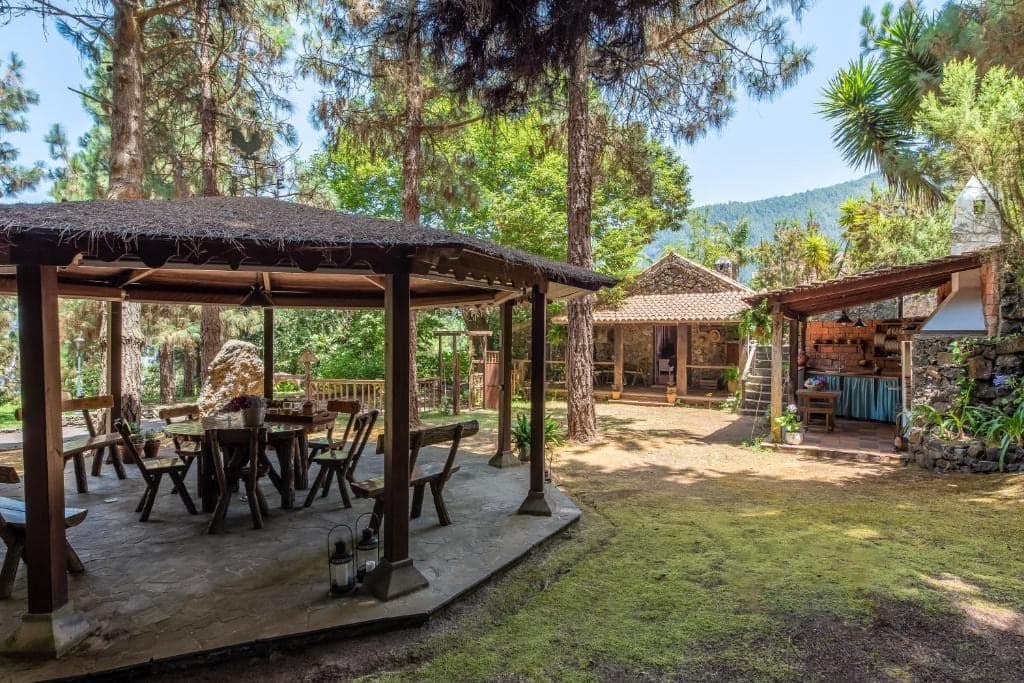
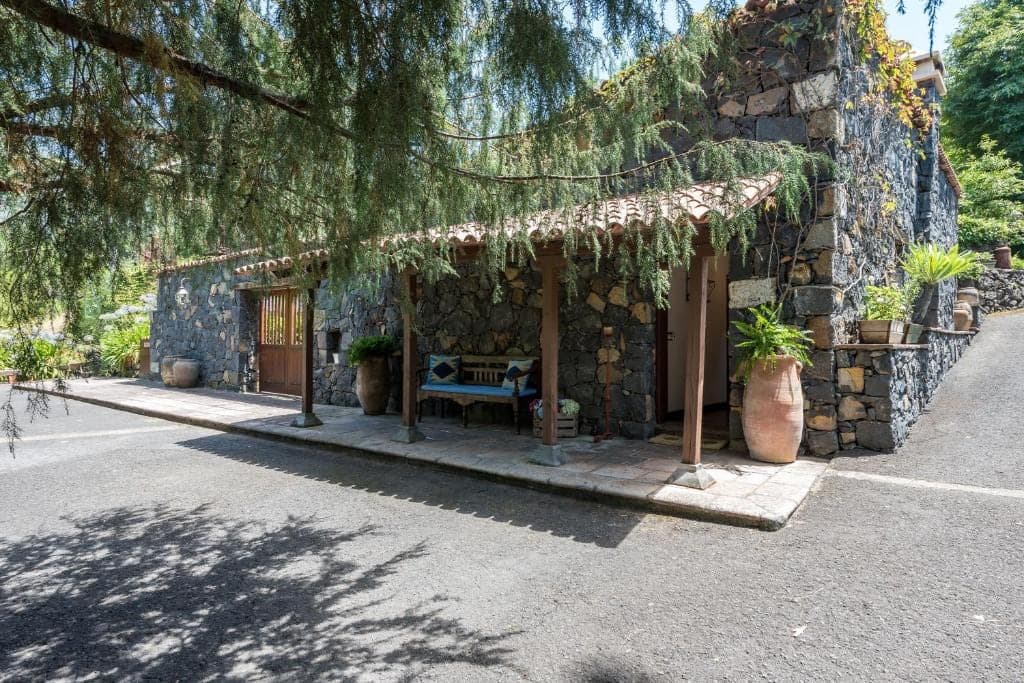
Hacienda Verde has three self-contained houses in La Orotava, inside a 17,000 m² ethnographic park, twenty minutes from Mount Teide and fifteen from Puerto de la Cruz, with a century-old wine press on the estate itself. If you are looking at autumn dates, write to us: we will tell you what is open those weeks and how the weather tends to come in.
José Martín
Host of Hacienda Verde. He has spent years welcoming guests and exploring the Orotava Valley and Mount Teide.
Sleep in the valley, not on the coast.
Three rural houses inside an ethnographic park in La Orotava, 20-30 minutes from Mount Teide. You gain time and sleep surrounded by nature.
Keep reading

A birthday or a family lunch at a Tenerife estate: what to ask
Read
Accommodation with a view of Mount Teide
Read
Where to hold a wedding in Tenerife
Read
A romantic break in northern Tenerife
Read
Getting to La Orotava and around the north
Read
An intimate wedding in Tenerife
Read
Tenerife villa with a pool
ReadWhere to stay in Tenerife: north or south
ReadA wedding at a Tenerife estate
Read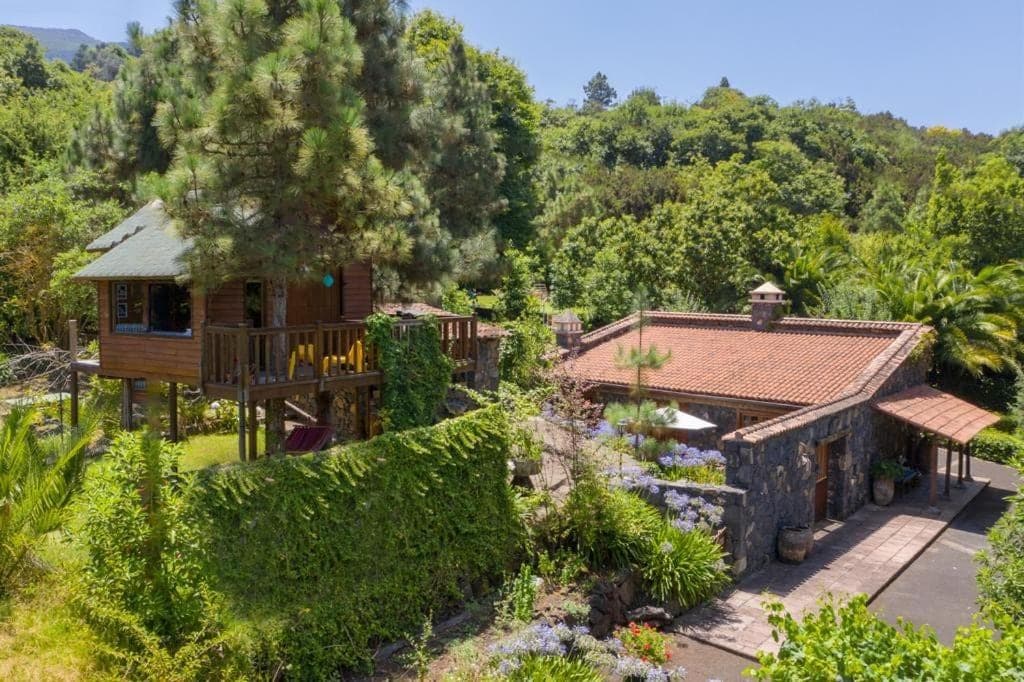
What to See in the Orotava Valley
Read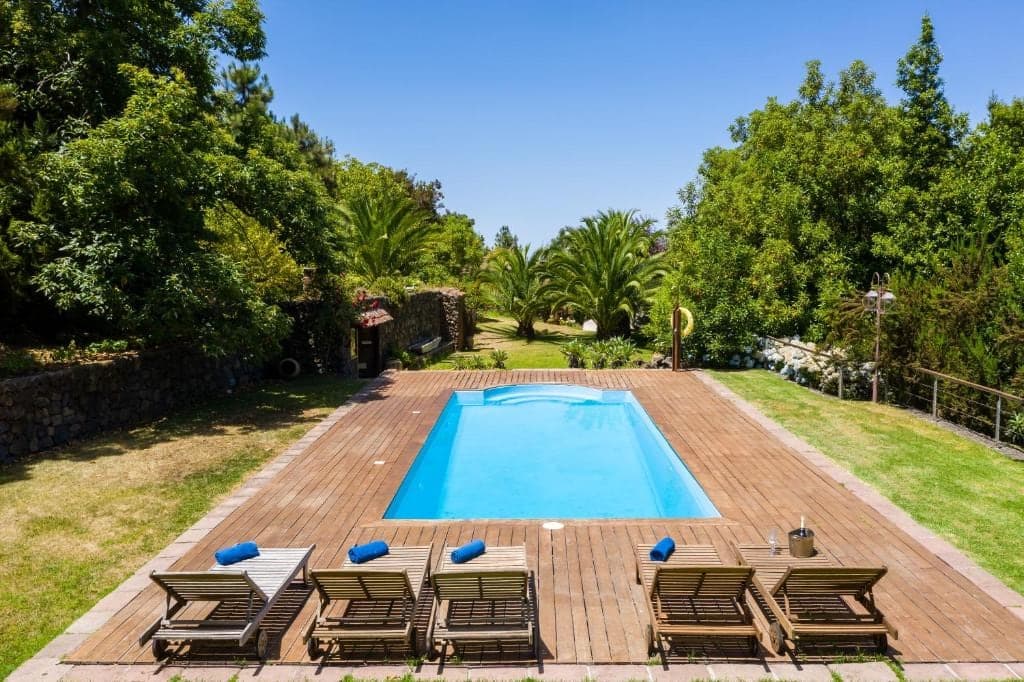
The Best Mount Teide Hikes from La Orotava
ReadWhen to Visit Tenerife: The North Coast Climate, Month by Month
ReadThe Permit to Climb Mount Teide
Read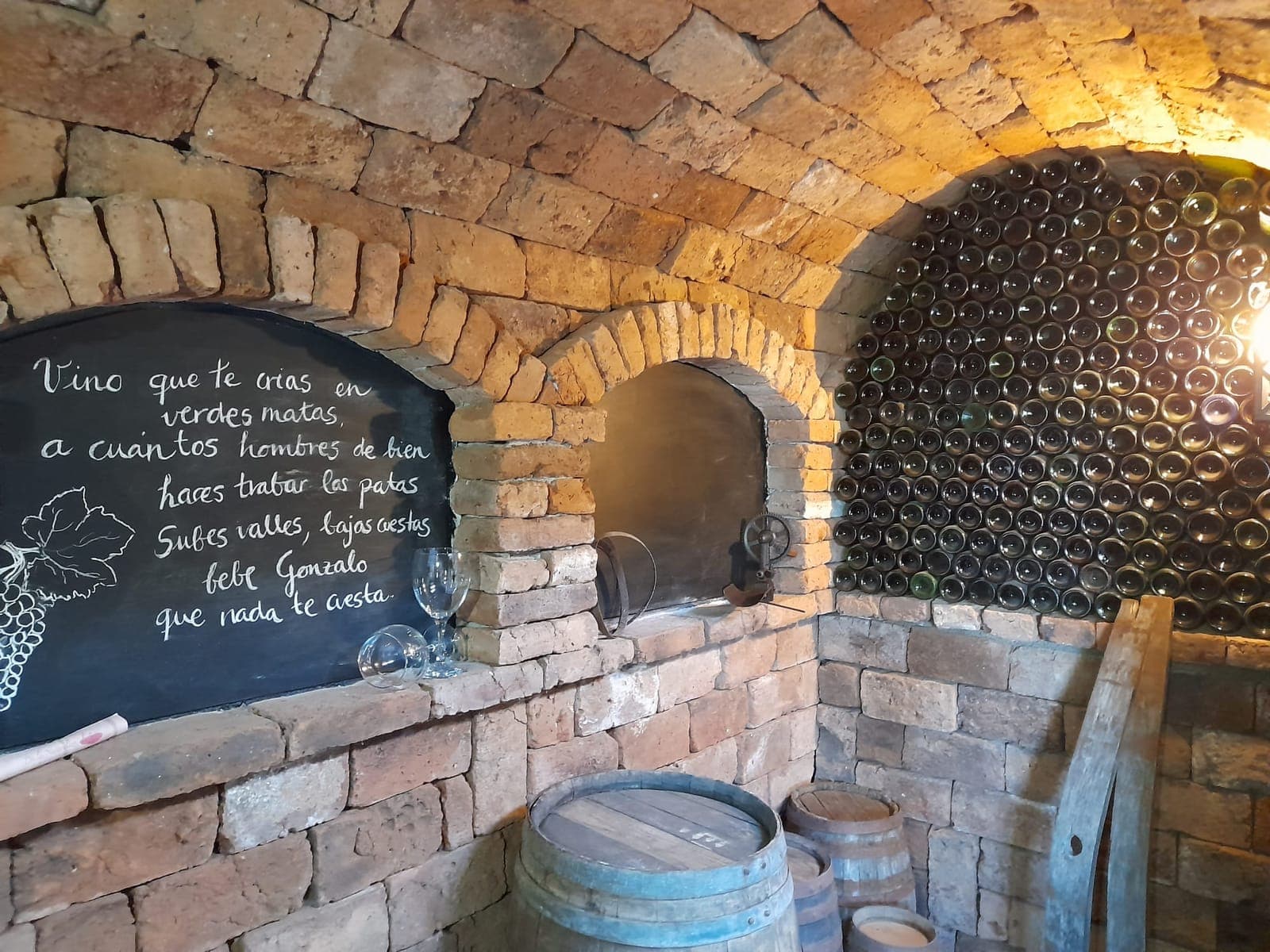
Guachinches in Tenerife: Which Ones Are the Real Thing
Read
Can you get married in Tenerife? What couples from abroad do
ReadVisiting Mount Teide: cable car, prices and opening times
Read