Blog · northern Tenerife
Getting married in Tenerife from abroad: the paperwork at home, the ceremony here
Most of the emails we get from abroad ask the same thing in different words: can we actually get married in Tenerife, or just have the party there? The honest answer has two halves. Legally, Spain wants at least one of you to live here. In practice, that stops almost nobody: the couples who marry in our garden signed the papers in Manchester, Dublin or Hamburg weeks before, and nobody at the ceremony could tell. Here is what the law says, what people really do, and the things about the north that the brochures skip — including the rain.
The short answer, with the source
The British government's own guidance on getting married in Spain puts it in one line: "you or your partner must live in Spain or be a Spanish national to get married in Spain". That is the rule. It is not a Tenerife rule or a Canary Islands rule; it applies to a civil marriage anywhere in the country.
On the Spanish side it shows up as paperwork rather than a sign on the door. The marriage file (expediente matrimonial) that the Civil Registry opens before any legal wedding asks, among other documents, for a certificate of historical residence covering the last two years. If neither of you has lived in Spain, you cannot produce it, and the file does not move.
So if you are two people who live in Leeds, or Cork, or Rotterdam, and you want the legal marriage itself to happen in Tenerife, the plain answer is no. If you want to get married and have the wedding in Tenerife, the answer is yes, and it is what nearly everyone does.
What most couples from abroad actually do: marry at home, celebrate here
The legal part happens in your own country. A register office in the UK, a registry office in Ireland, a Standesamt in Germany: a short appointment, two witnesses, a certificate. Some couples do it the week before they fly, some do it months earlier and tell nobody.
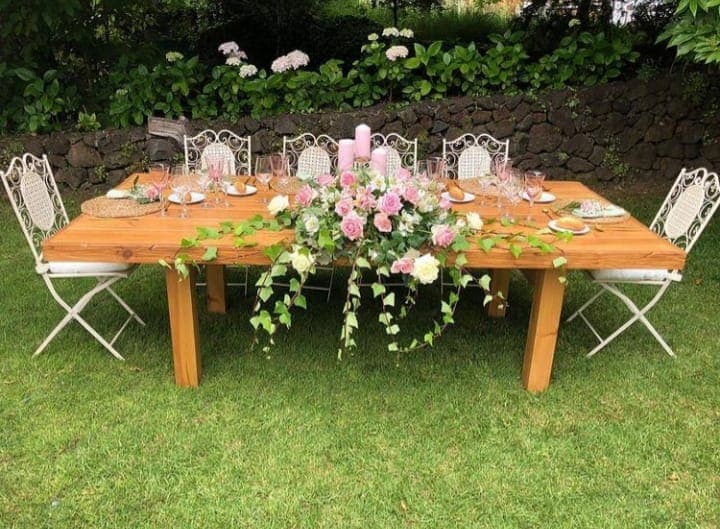
The wedding — the one with the dress, the vows and eighty people — happens here, as a symbolic ceremony. A symbolic ceremony has no legal weight in Spain, and that is exactly what makes it easy: there is no script to follow, no official to book, no waiting period and no day of the week that is off limits. A friend can officiate. A sister can. You can write every word yourselves or borrow half of them.
Nobody watching can tell the difference, because there is none to see. The rings go on, the promises are made, the confetti flies. The only thing that changes is a signature in a different building on a different day.
If you would rather have both on the same trip, the British consulates in Spain issue a certificate of no impediment and a marital status certificate, and the forms have to be notarised in Spain. But that route is for couples where one of you is resident here; the two-year residence certificate above does not go away.
If one of you lives in Spain: the civil route and how long the file takes
If one of you is resident in Spain, the legal wedding can happen here, and then the question is timing. The marriage file goes through the Civil Registry or a notary. Registry times vary a lot with the office and its workload — the figures you will read range from 15-45 days to 30-75 days — so treat them as an order of magnitude and confirm with the office in your municipality. The notary route tends to be more predictable: a notary is assigned within 3-5 working days and the file is usually complete in 15-30 days if the papers are in order, so 30-45 days in all.
Because of that spread, the usual advice is to start the paperwork three to six months before the date. Once the file is approved you have one year to hold the wedding before it expires, so there is no point starting a year and a half early either.
The documents you will be asked for: original ID or passport for both of you, a full birth certificate from the Civil Registry (valid for six months), the certificate of historical residence for the last two years (valid for three months), and, if either of you was married before, the divorce or annulment ruling or the previous marriage certificate with the marginal note.
When to hold it outdoors in the north, with the rain in the numbers
The north of Tenerife is the green side, and green means rain. The official AEMET station for the north, at 632 metres, records 47 mm in October spread over six and a half days, and 81 mm in November over a little more than eight. August, for comparison, gets 5 mm. On the south-east coast the same two months bring 19 mm and 34 mm.
That gives you the real windows. May, June, September and October are the months we recommend for a garden ceremony: warm without being hot (October still averages 22.5 °C at midday with 194 hours of sun), and rain that is a possibility rather than a plan. July and August are hot and bring calima, the Saharan dust haze. From December to March the south wins for an outdoor wedding, and we say so in our guide to where in Tenerife to hold a wedding.
One thing that catches people out every year: the clocks go back on Sunday 25 October 2026. An afternoon ceremony that had golden light the week before loses an hour of it overnight. If your date is in late October or November, start earlier than feels natural.
And whatever the month, ask any venue what happens if it rains: where the ceremony moves, where the tables go, and how many people fit under cover. In the north that is not a polite question, it is the question.
Six things to settle with the venue before you book flights
- Whether it hosts one event at a time or shares the estate between two — on a Saturday in September this decides whether you have the garden to yourselves
- Seated capacity and cocktail capacity as two separate numbers, and the seated number with the wet-weather plan, not just the sunny one
- Where your guests sleep: rooms on the estate, and whether they can be block-booked for the whole weekend, or a hotel fifteen minutes away and a shuttle
- Catering: an in-house kitchen or outside suppliers, and if outside, whether there is an exclusivity list or a fee for bringing your own
- The music cut-off time, in writing — it depends on the municipality as much as the venue
- How far ahead a Saturday goes: for high season the figure you will read in wedding forums is 12-18 months, which is not an official statistic, so confirm it with the venue directly
How a symbolic ceremony works at Hacienda Verde
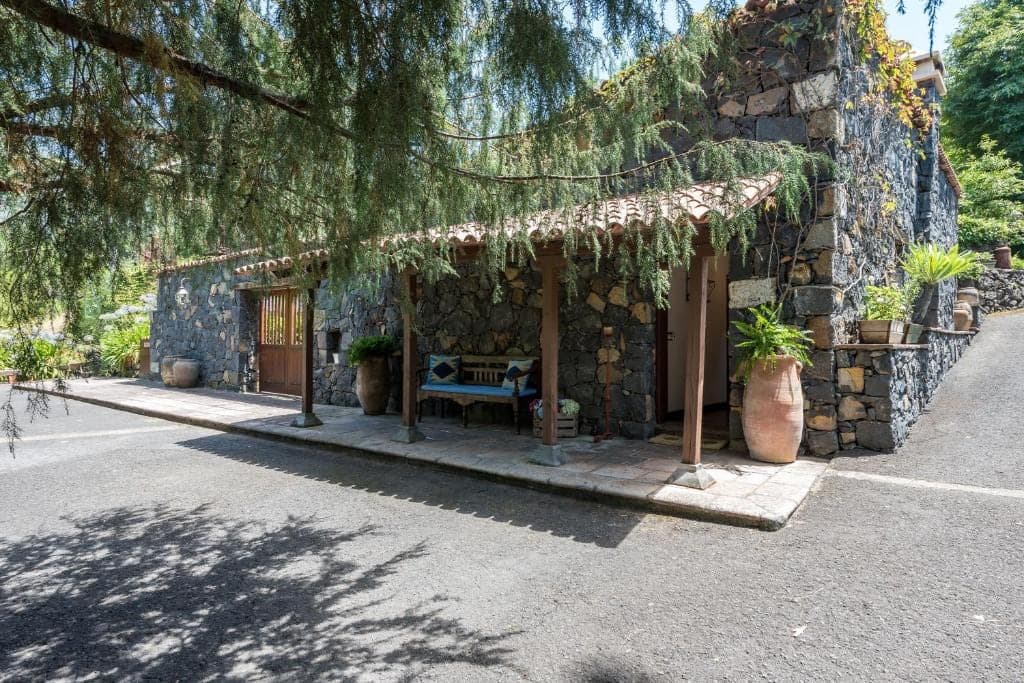
We are in the Orotava Valley at about 500 metres, on 17,000 square metres of garden with Mount Teide in front and one event at a time: your wedding does not share the estate with anyone else's. The ceremony usually happens among the tajinastes or beside the old wine press, the banquet by the pool facing the volcano. Up to 80 guests seated, 100 for a cocktail-style reception.
Catering is external, with caterers from the valley who already know the estate and its kitchen, so you are not tied to one menu. Three houses sit inside the estate, each for up to four people, which is where the couple and the closest family usually sleep the night before and the night after.
September is our most requested month, and for a Saturday then we suggest around twelve months' notice. Smaller weddings fill differently: if you are thirty people rather than a hundred, the guide on a small wedding and how many guests explains what changes. The rest of the day — timings, suppliers, budget — is in how a wedding at an estate actually works, and the estate itself, with the spaces and the form, is on the page for the finca as a wedding venue in Tenerife.
Write to us with your date and roughly how many of you there will be. We will tell you within 24 hours whether the date is free, what the garden looks like that month and, if you are coming from abroad, which of the two routes above fits you — and we will say so plainly if it is not us.
José Martín
Host of Hacienda Verde. He has spent years welcoming guests and exploring the Orotava Valley and Mount Teide.
Hold the ceremony right here.
Seventeen thousand square metres of garden at the foot of Mount Teide, up to 80 seated guests and three houses so your closest never have to drive home.
Keep reading
A birthday or a family lunch at a Tenerife estate: what to ask
Read
Accommodation with a view of Mount Teide
Read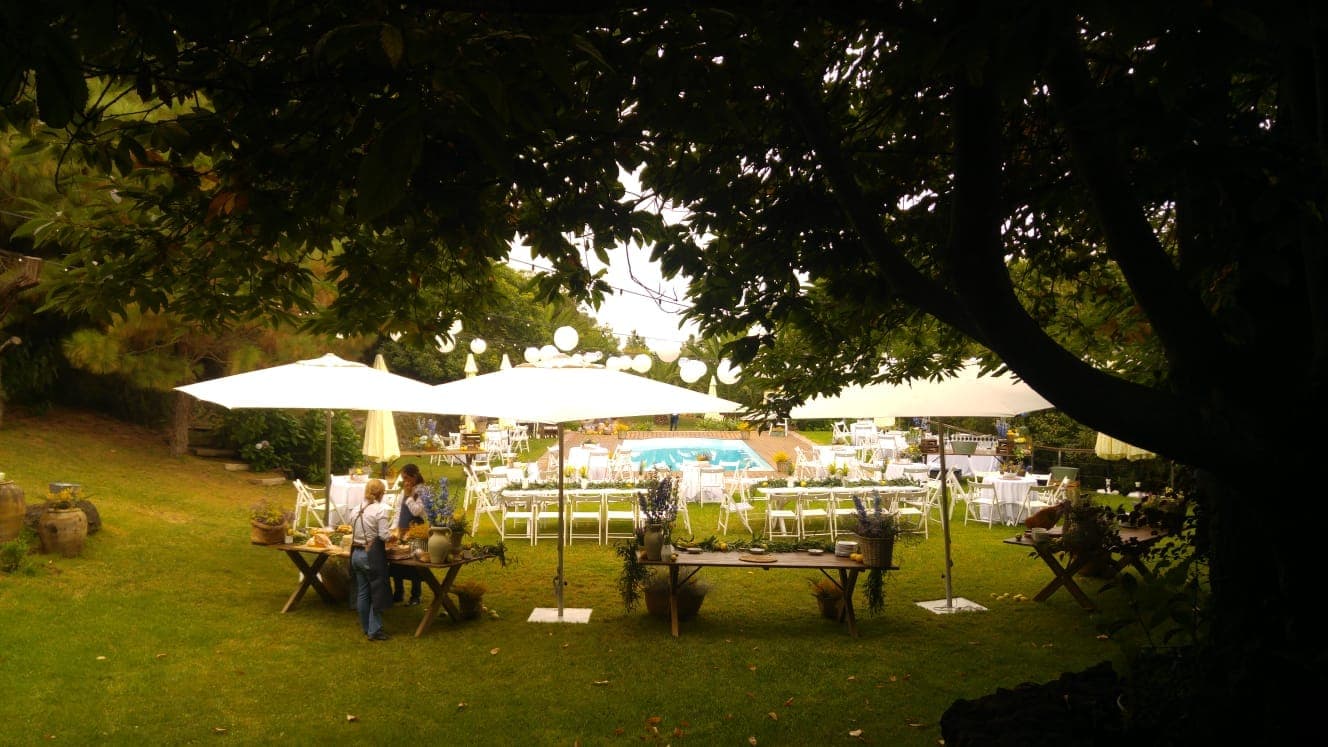
Where to hold a wedding in Tenerife
Read
A romantic break in northern Tenerife
Read
Getting to La Orotava and around the north
Read
An intimate wedding in Tenerife
Read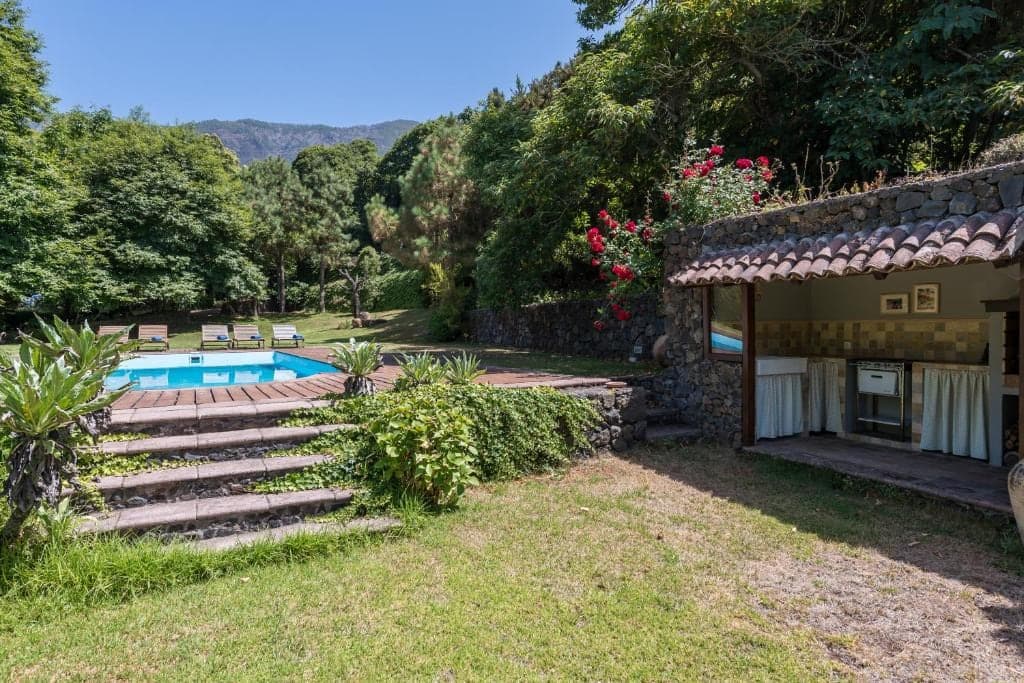
Tenerife villa with a pool
ReadWhere to stay in Tenerife: north or south
ReadA wedding at a Tenerife estate
Read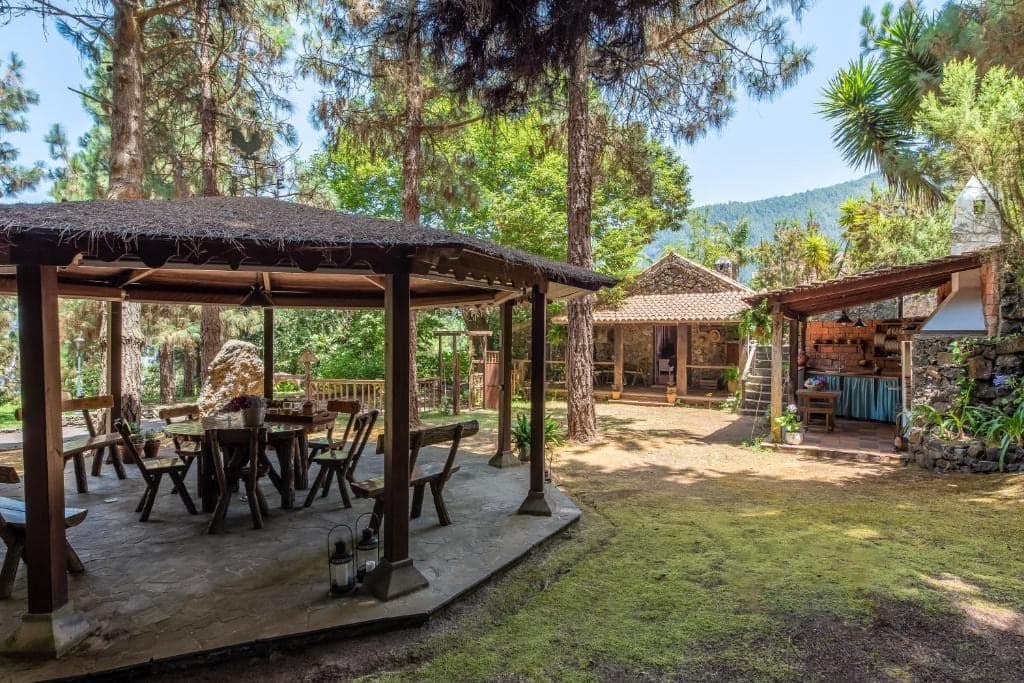
Tenerife in October and November
Read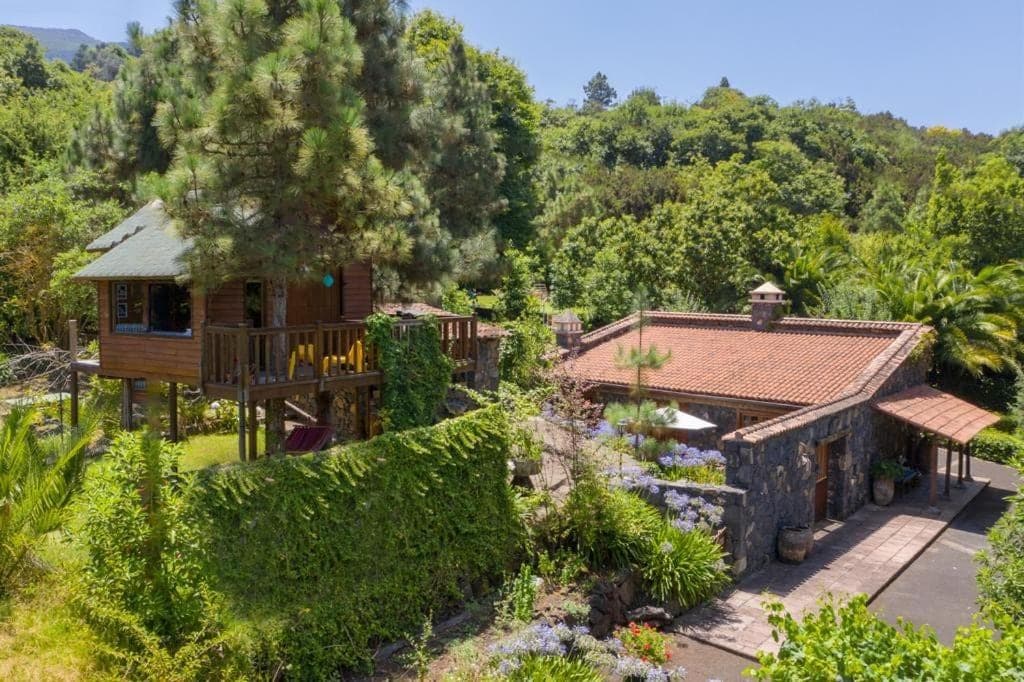
What to See in the Orotava Valley
Read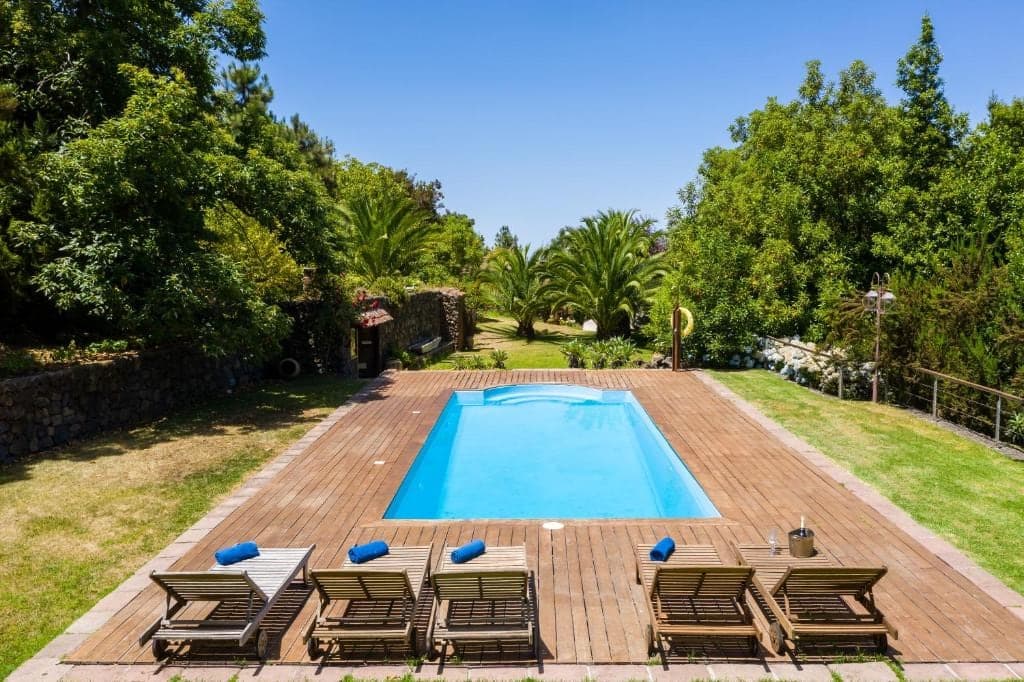
The Best Mount Teide Hikes from La Orotava
ReadWhen to Visit Tenerife: The North Coast Climate, Month by Month
ReadThe Permit to Climb Mount Teide
Read
Guachinches in Tenerife: Which Ones Are the Real Thing
ReadVisiting Mount Teide: cable car, prices and opening times
Read