Blog · northern Tenerife
When to Visit Tenerife: The North Coast Climate, Month by Month
La Orotava sits on the north coast of Tenerife, at the foot of Mount Teide, and that shapes the climate more than the time of year you visit. There's no truly bad season up here, but the north plays by its own rules: low cloud even in the height of summer, rain concentrated in just a few months, and a sea that's actually warmer in autumn than in August. Here's what we know — official data plus what we see on the ground — about when to come and what to expect.
The short version: mild all year, but not the same everywhere
The nearest official weather station (AEMET, Tenerife Norte Airport, at 632 m) records a yearly average of 16.8 °C: the coldest month is January, averaging 13.1 °C (highs of 16.0 °C, lows of 10.2 °C), and the warmest is August, averaging 21.2 °C (highs of 25.7 °C, lows of 16.6 °C). It's official data, but it comes from a higher, slightly cooler spot than the coast.
Down in Puerto de la Cruz, 15 minutes from the estate, temperatures are noticeably milder: highs of 20-21 °C in winter and 26-27 °C in summer, with lows rarely dropping below 15 °C. La Orotava sits at a mid-altitude point between the two: around the area, the coldest months hover around 16-17 °C for highs and 10-12 °C for lows, while August, the warmest, climbs to around 25 °C.
You'll find slightly different figures depending on the source you check — that's normal, each weather site uses its own model or reference station — so treat these as approximate ranges rather than exact decimals.

Month by month: what to pack
Broken down by season, here's how the north behaves through the year around the estate:
- December-February: mild days, highs of 16-18 °C and lows of 10-12 °C. This is the rainiest stretch of the year.
- March-May: temperatures climbing, highs of 17-20 °C. March can still bring the odd rainy day.
- June-August: the warmest and driest stretch. August is the hottest month, with highs around 25 °C.
- September-November: similar to spring, highs of 19-24 °C, with the rain returning by November.
- Whatever month you pick, bring a light layer: it's only 20-30 minutes by car to Las Cañadas, where it's noticeably cooler than at the estate.
The 'panza de burro': why the sky over the valley doesn't always match the sky over Teide
One of the most typical features of northern Tenerife's weather is the 'panza de burro' (literally 'donkey's belly') — a layer of low stratocumulus cloud pushed in by the trade winds, which usually settles between about 500-600 and 1,500-1,600 metres, clinging mostly to the island's north side. Seen from below, it's a solid grey sky; seen from above, a sea of clouds.
What's striking is that this layer is actually more common in July and August, right in the middle of summer, while the south of the island — sheltered from the trade winds — tends to get sun almost every day in those same months. Above the cloud layer, up around Mount Teide and Las Cañadas, the sky is usually clear regardless of what's happening below: so a grey day at the estate doesn't mean a grey day on the mountain, and the other way around.
When it rains — and when it doesn't
The wet season in the north runs from October to April, with an average of around 10 rainy days a month. The wettest months are November, December and January (81, 82 and 80 mm respectively at the official airport station); the driest are June, July and August, bottoming out in August (5 mm) and July (6 mm).
The contrast with the south of the island is significant: over that same wet season, the south only gets 2-3 rainy days a month, and its yearly rainfall total (around 115 mm in areas like Playa de las Américas, a rough figure) is a fraction of the 500-600 mm that falls on the north coast. That's why the north is Tenerife's green side and the south is its arid one: if you want guaranteed sun day after day, the south delivers it more often; if you want banana plantations, gardens, and the volcano with clouds at its feet, that's a north-side thing.
For swimming, for climbing Teide, and for avoiding the crowds
Three practical questions guests ask us before booking:
- When's the sea warmest? In Puerto de la Cruz the water stays above 20 °C from April to January. Counterintuitively, the coldest point isn't in winter but in early March (~17.2 °C), and the warmest isn't in August but around late September (~22-23 °C on average in autumn).
- Can you always go up Mount Teide? The free permit for the final 200 metres to the summit (3,718 m) is best requested 1-2 weeks ahead. The cable car, on the other hand, can close for high wind in any month of the year — if you've booked ahead, they'll notify you by email or SMS around 8:30 am the same day if it's cancelled.
- When are there fewer people? July-August, Easter week and Christmas are high season in the north. May and June tend to combine good weather, low rain and lighter crowds; September adds the warmest sea of the year on top of that.
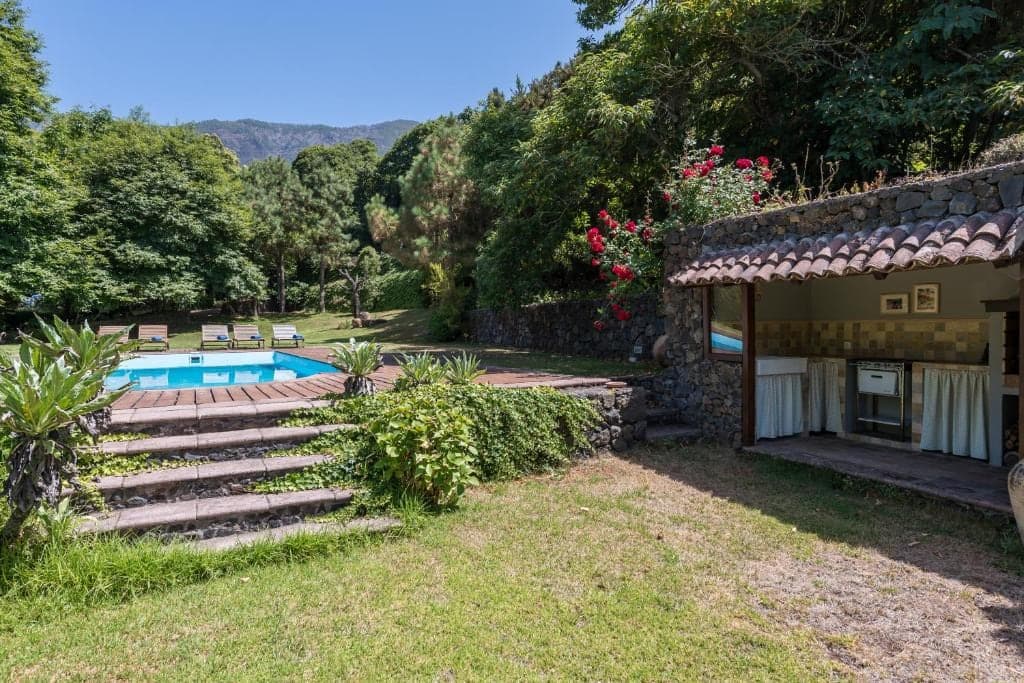
Whichever month you choose, at Hacienda Verde the weather is rarely a problem: the estate's three houses are built to be enjoyed with sun by the pool, or with the 'panza de burro' blanketing the valley while the sun shines up on Teide. If you're coming in autumn, October and November have a guide of their own. And if you write to us before booking, we'll tell you what the weather's usually like that week and help you plan your visit to Las Cañadas with a bit of margin.
José Martín
Host of Hacienda Verde. He has spent years welcoming guests and exploring the Orotava Valley and Mount Teide.
Sleep in the valley, not on the coast.
Three rural houses inside an ethnographic park in La Orotava, 20-30 minutes from Mount Teide. You gain time and sleep surrounded by nature.
Keep reading

A birthday or a family lunch at a Tenerife estate: what to ask
Read
Accommodation with a view of Mount Teide
Read
Where to hold a wedding in Tenerife
Read
A romantic break in northern Tenerife
Read
Getting to La Orotava and around the north
Read
An intimate wedding in Tenerife
ReadTenerife villa with a pool
ReadWhere to stay in Tenerife: north or south
ReadA wedding at a Tenerife estate
Read
Tenerife in October and November
Read
What to See in the Orotava Valley
Read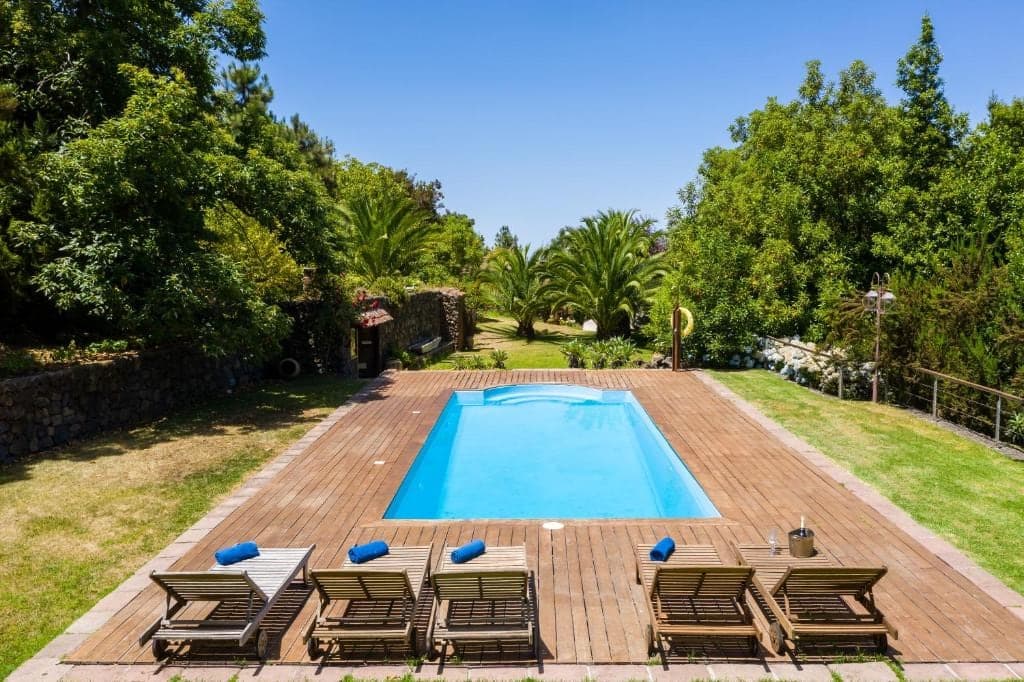
The Best Mount Teide Hikes from La Orotava
ReadThe Permit to Climb Mount Teide
Read
Guachinches in Tenerife: Which Ones Are the Real Thing
Read
Can you get married in Tenerife? What couples from abroad do
ReadVisiting Mount Teide: cable car, prices and opening times
Read