The ethnographic garden

Ethnographic garden of native Canary Island flora, in La Orotava.

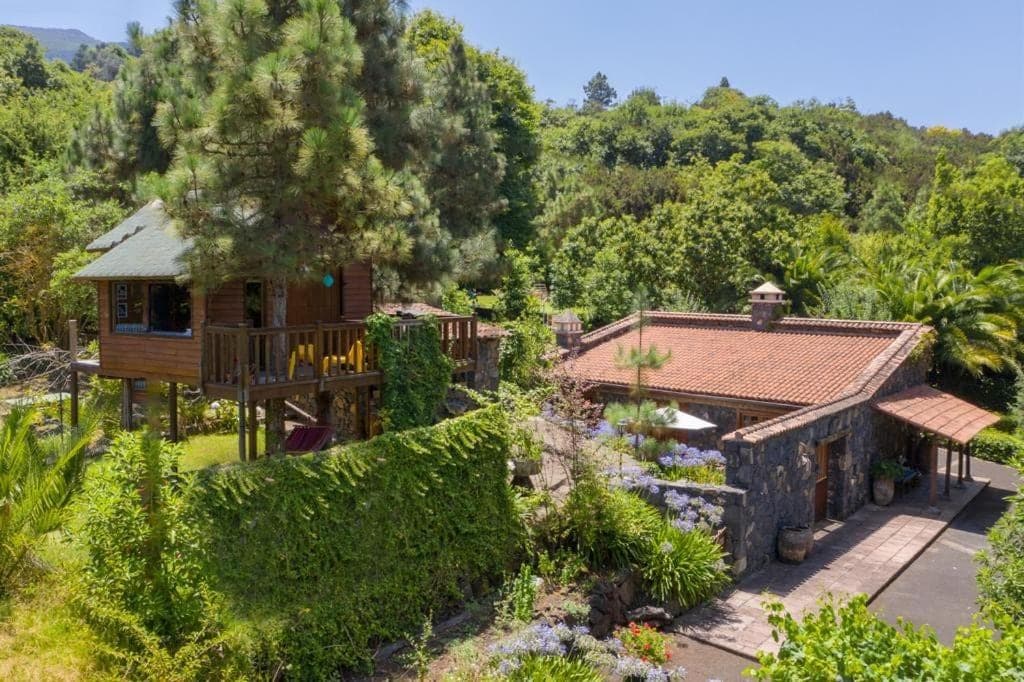
This estate is one of the most beautiful rural settings in the municipality of La Orotava. Seventeen thousand square metres given over to an ethnographic park and leisure, replanted one seedling at a time over three decades. What you see today, the tajinaste in bloom, the palm-tree tunnel, the hydrangeas along the stone wall, was not here in 1996.

Aerial view of the Hacienda Verde estate with the houses, the pool and the garden against the peaks of Mount Teide

How it began

How it began.

Thirty years ago this land was dry and most of it had no shade. We started by planting the almond trees, then the Canary Island pines, then the fruit trees. The small vineyard came later.

The tajinaste and the agapanthus arrived in waves, one year the tajinaste, another year the blue agapanthus, another the hydrangeas along the stone wall. Every plant had its place. The estate looks after itself now; we only prune and water it when it needs it.

The traditional Canarian wine press, the hay barn and the threshing floor were already here when we arrived. They are heritage features that belong to the estate. The hay barn is listed by the Cabildo and is being restored; the wine press still keeps its sandstone-brick vault, the barrels and the bottles; the threshing floor guards the old threshing cart beneath the almond tree.

* Working draft, pending final nuances from the owner before sign-off.
Inside the garden

What you see as you walk down to the pool.

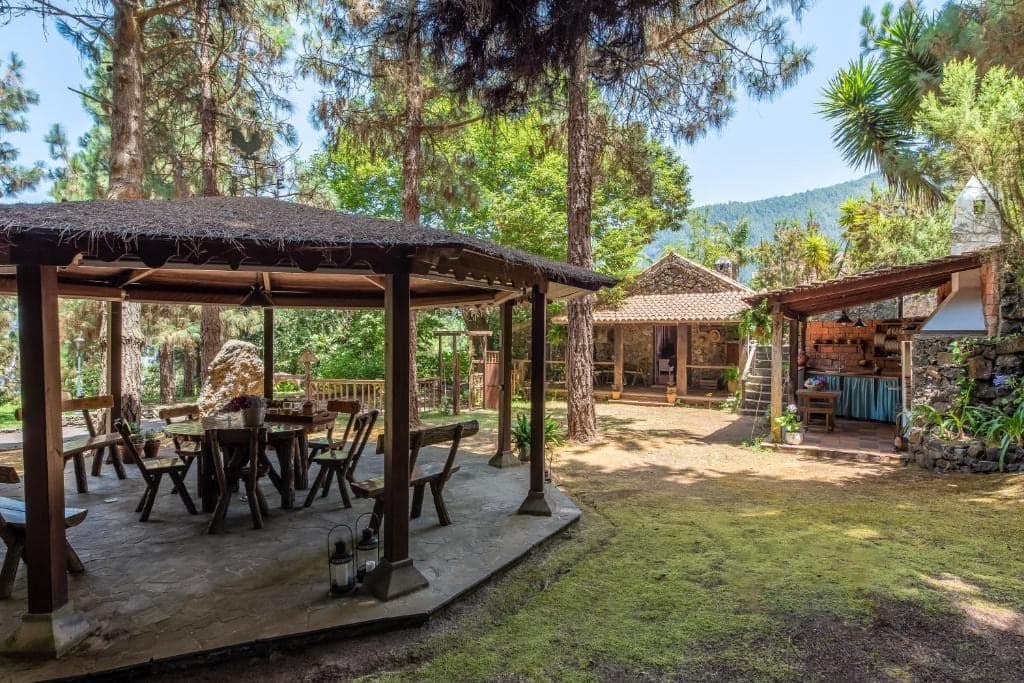
Wooden gazebo with traditional earthenware jars in the estate garden
Wooden gazebo among earthenware jars
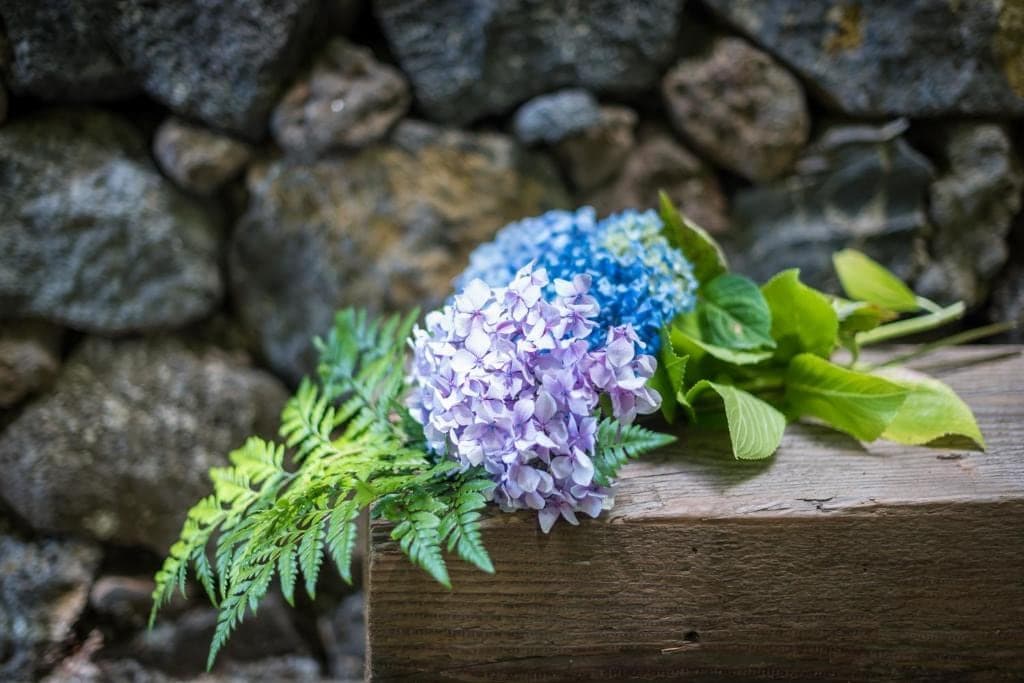
Cluster of blue and pink hydrangeas over the stone garden wall
Hydrangeas over the stone wall
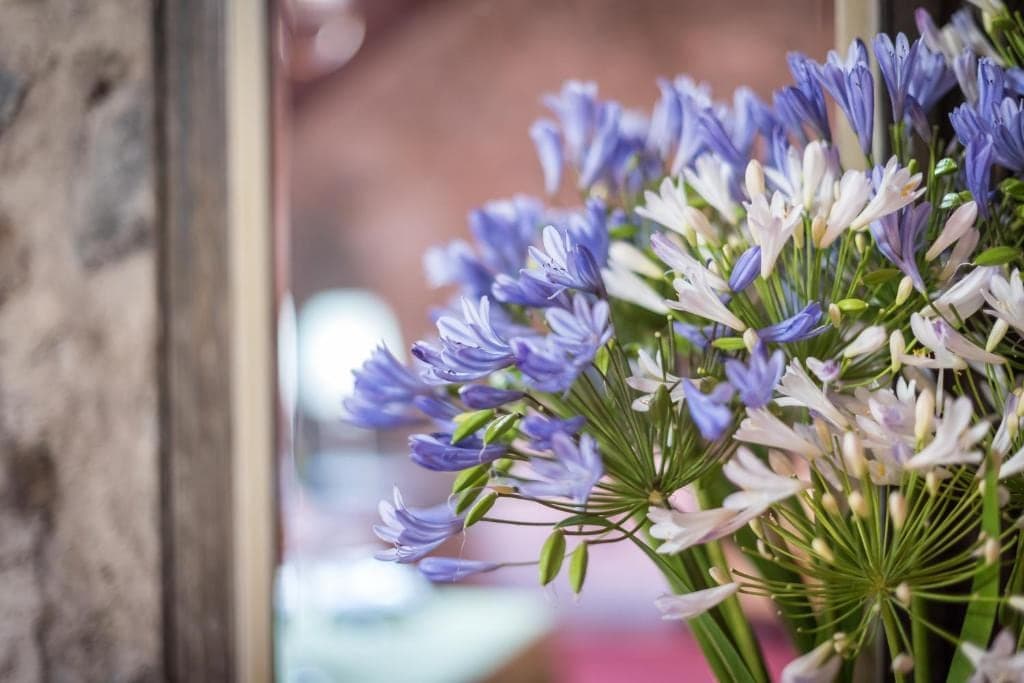
Blue agapanthus in bloom in the garden at Hacienda Verde
Agapanthus in bloom
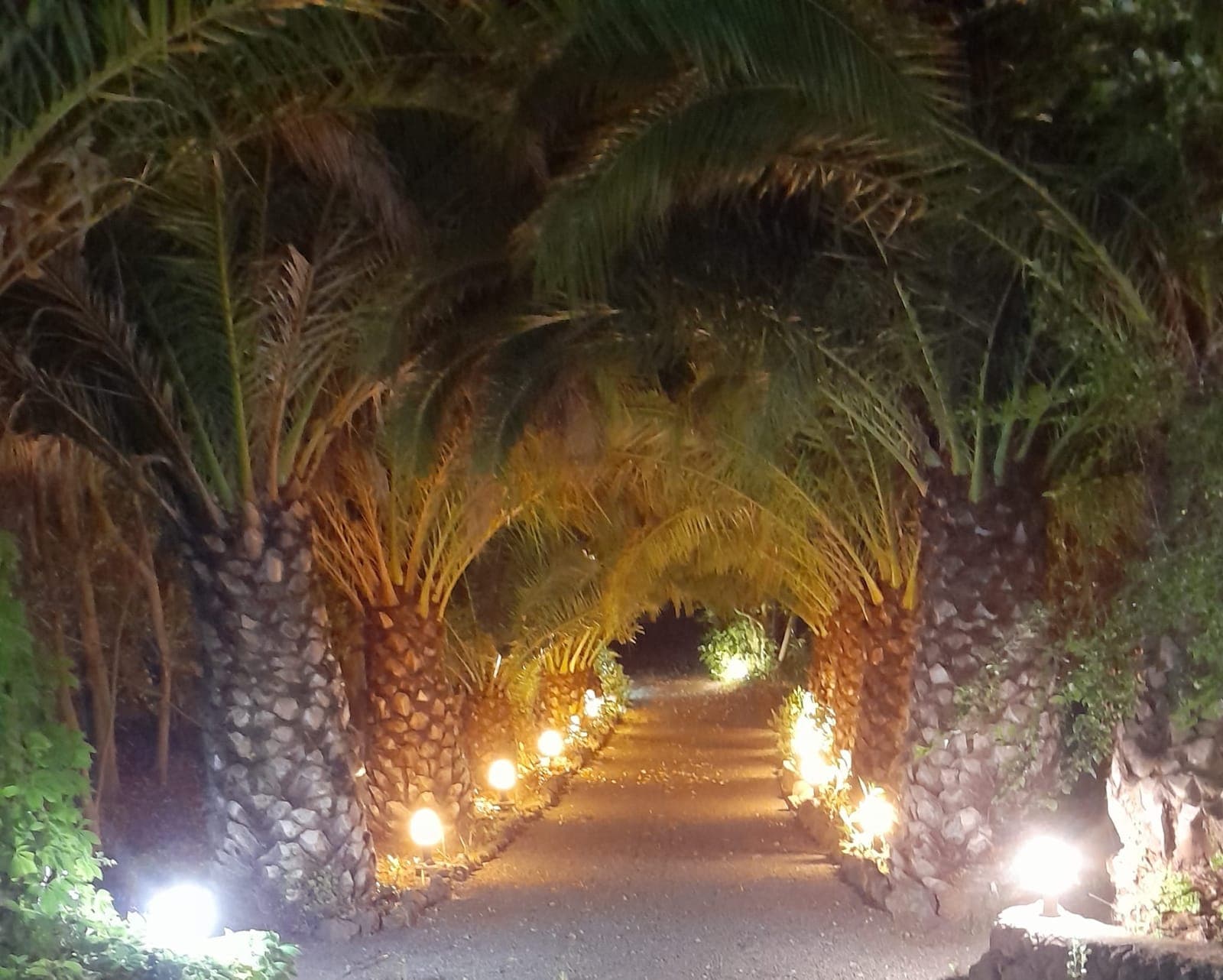
Tunnel of Canary Island palms lit with warm light at night
Palm-tree tunnel at night
Aerial view of Hacienda Verde with the houses, the garden and the peaks of Mount Teide in the background
Aerial view of the estate
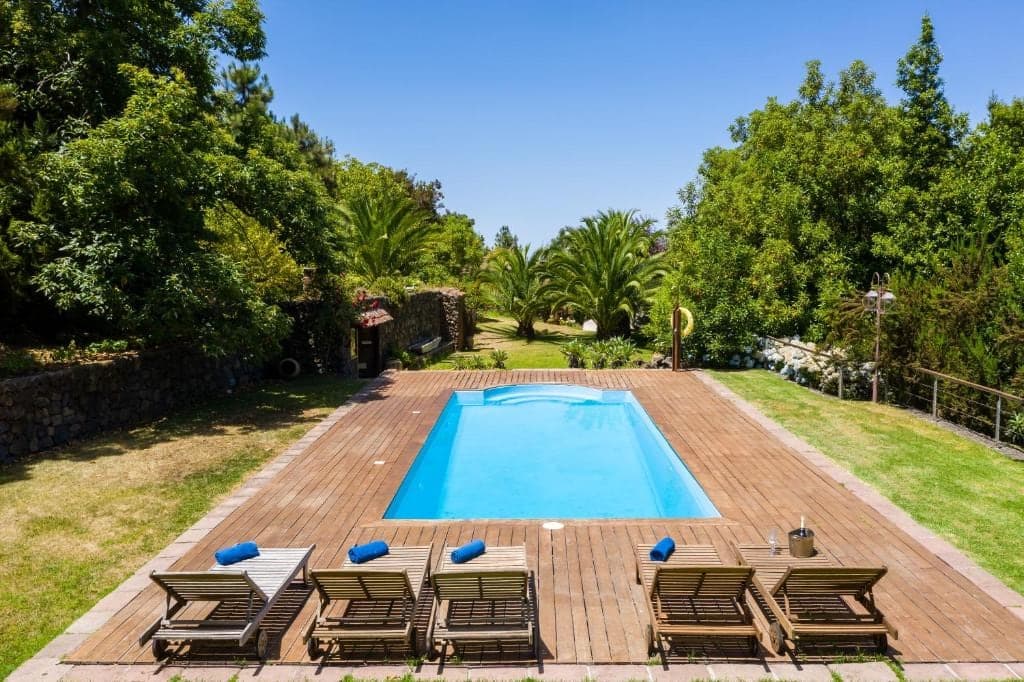
Rectangular estate pool with the peaks of Mount Teide in the background
Pool with views of Mount Teide

What the estate has kept

Heritage ethnographic features within the garden.

This is not a museum open to the public. These are features that belong to the estate and that you explore during your stay, among the fruit trees and the agapanthus. Step into each one to learn what it was and how it worked.

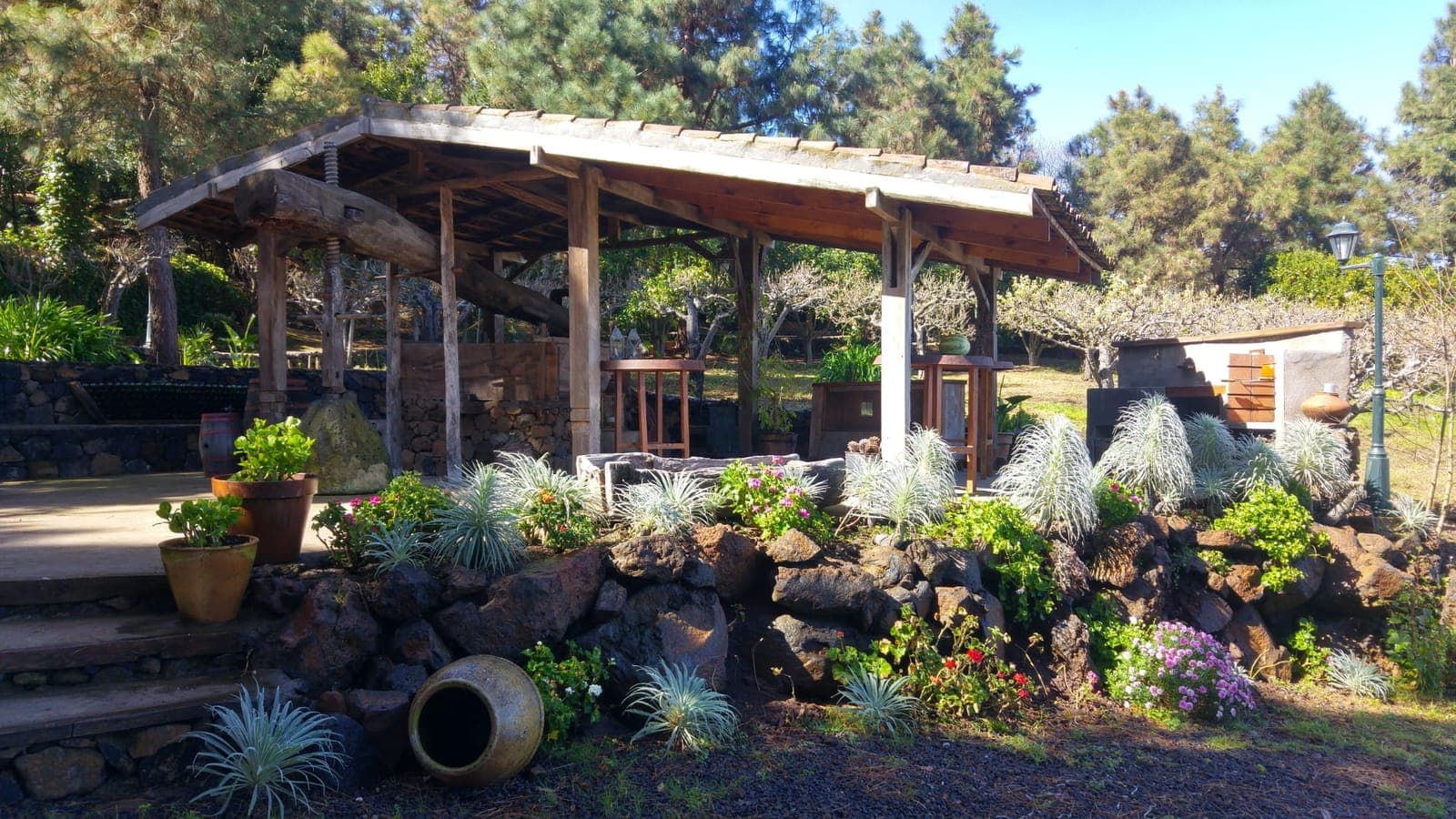
Beam press of the wine press under a tiled roof, with barrels and a wooden screw

Sandstone vault · beam press

The century-old wine press

The traditional wine press still keeps its century-old vault of sandstone brick, the wooden barrels and the bottles stacked in an arch. Outside, the old beam press rests beneath its roof.

It no longer makes wine: it is a heritage feature that lives within the garden and can be explored during your stay.

Learn more about the the century-old wine press
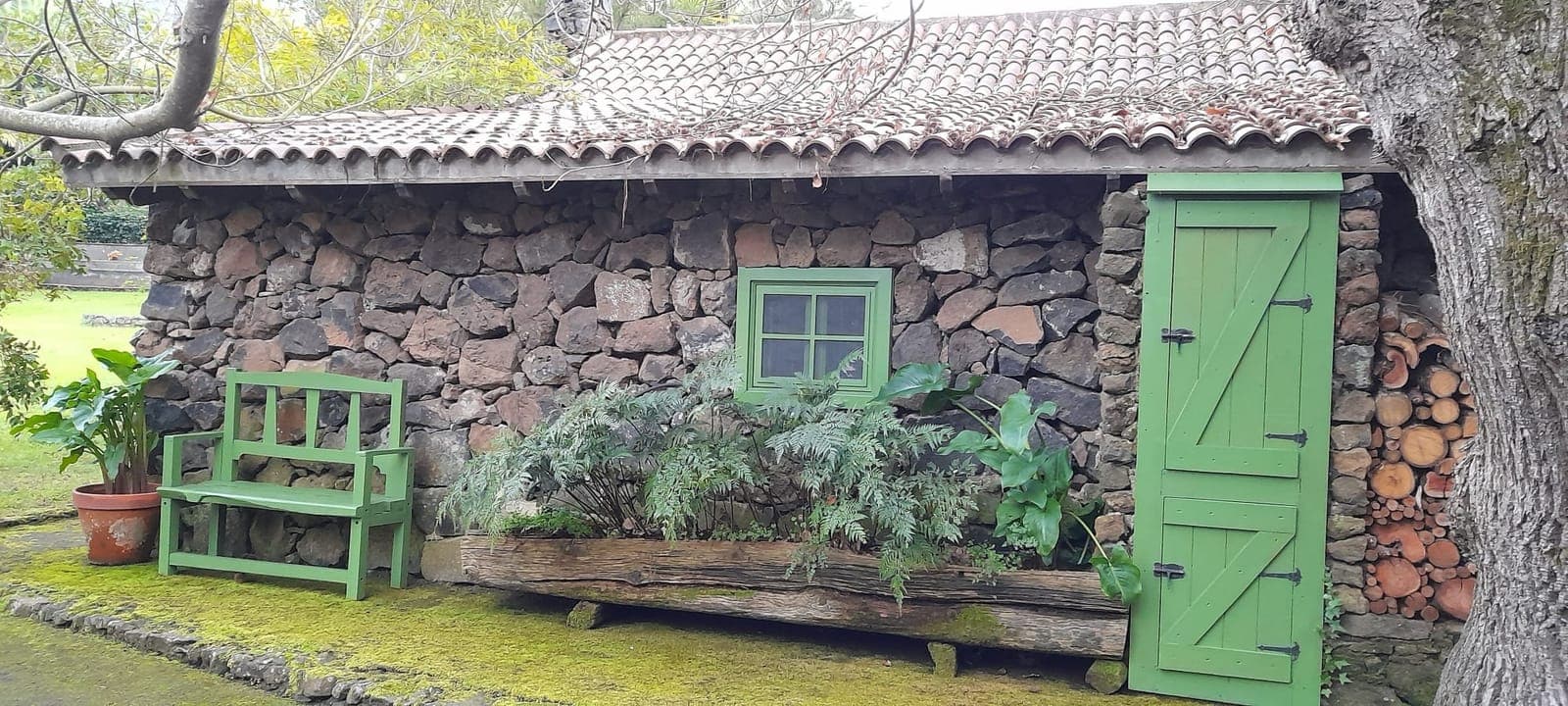
Traditional hay barn of dry volcanic stone with a green door and a thatched roof

Dry stone + thatched roof · listed

The hay barn · under restoration

Built of dry volcanic stone, with its green door and a thatched roof. The Cabildo of Tenerife has it listed as an ethnographic heritage site.

These months the roof is being rebuilt piece by piece, with the same materials it was first raised with.

Learn more about the the hay barn
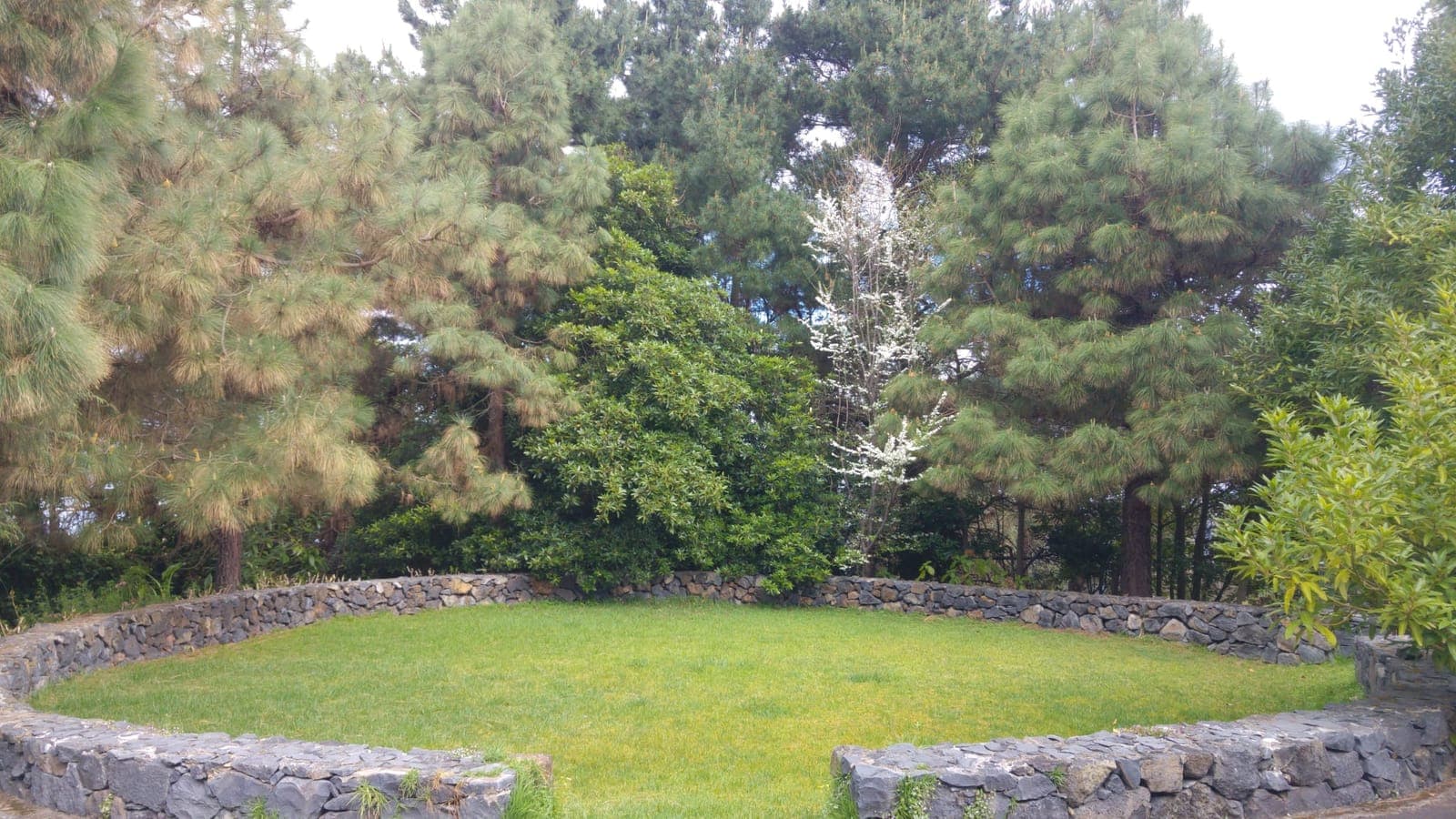
The threshing floor, a ring of lawn surrounded by a volcanic stone wall and Canary Island pines

Where the grain was threshed

The threshing floor

A ring of open lawn between walls of volcanic stone and Canary Island pines. On this ground the harvest grain was once threshed.

The wheel of the old cart still leans nearby, beneath the great almond tree that gives its name to one of the houses.

Learn more about the the threshing floor
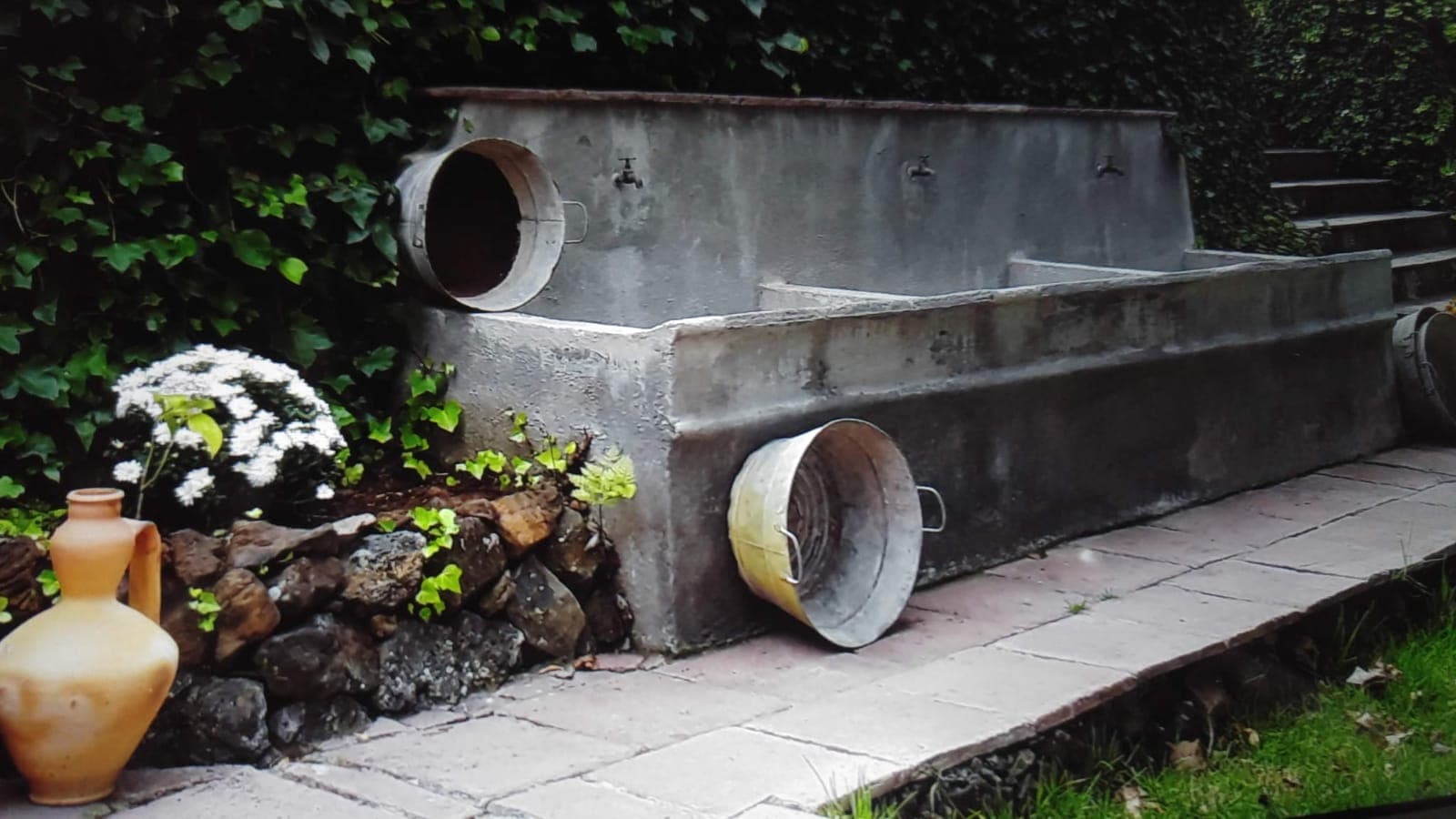
Stone washing troughs with basins, spouts and metal tubs, beside a clay water jar

Stone basins · running water

The stone washing troughs

The original basins still standing, with their spouts over the stone. Here the laundry was washed by hand before water reached the houses.

They are part of the garden walk, beside the large clay water jars.

Learn more about the the stone washing troughs
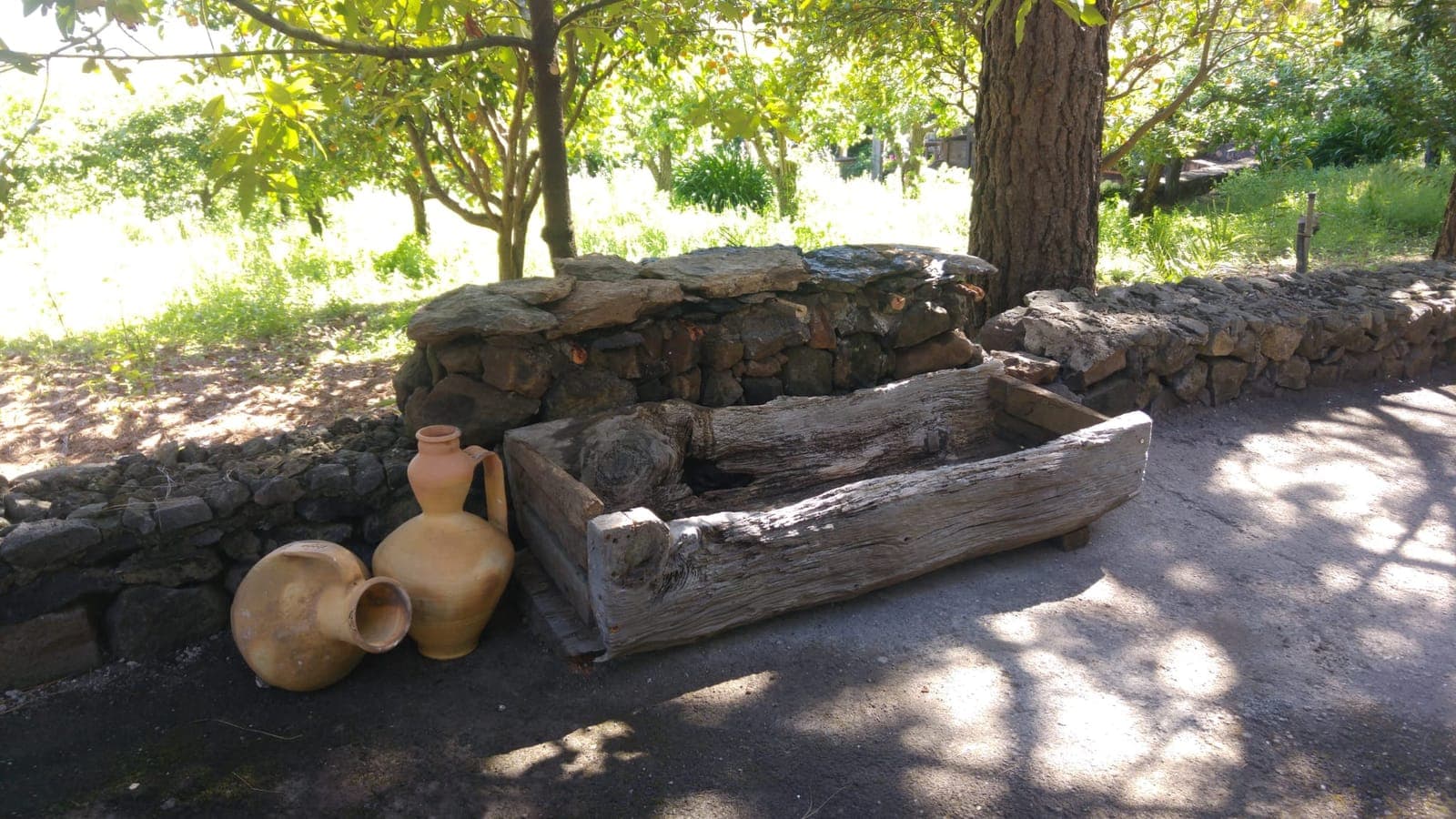
Carved wooden trough, hollowed from a single log, resting against a stone wall beside clay water jars

A trough from a single log

The carved wooden trough

A trough carved from a single hollowed-out log, resting against the stone wall with a couple of clay jars beside it.

One of the humblest features on the estate, and one of the loveliest to look at.

Learn more about the the carved wooden trough
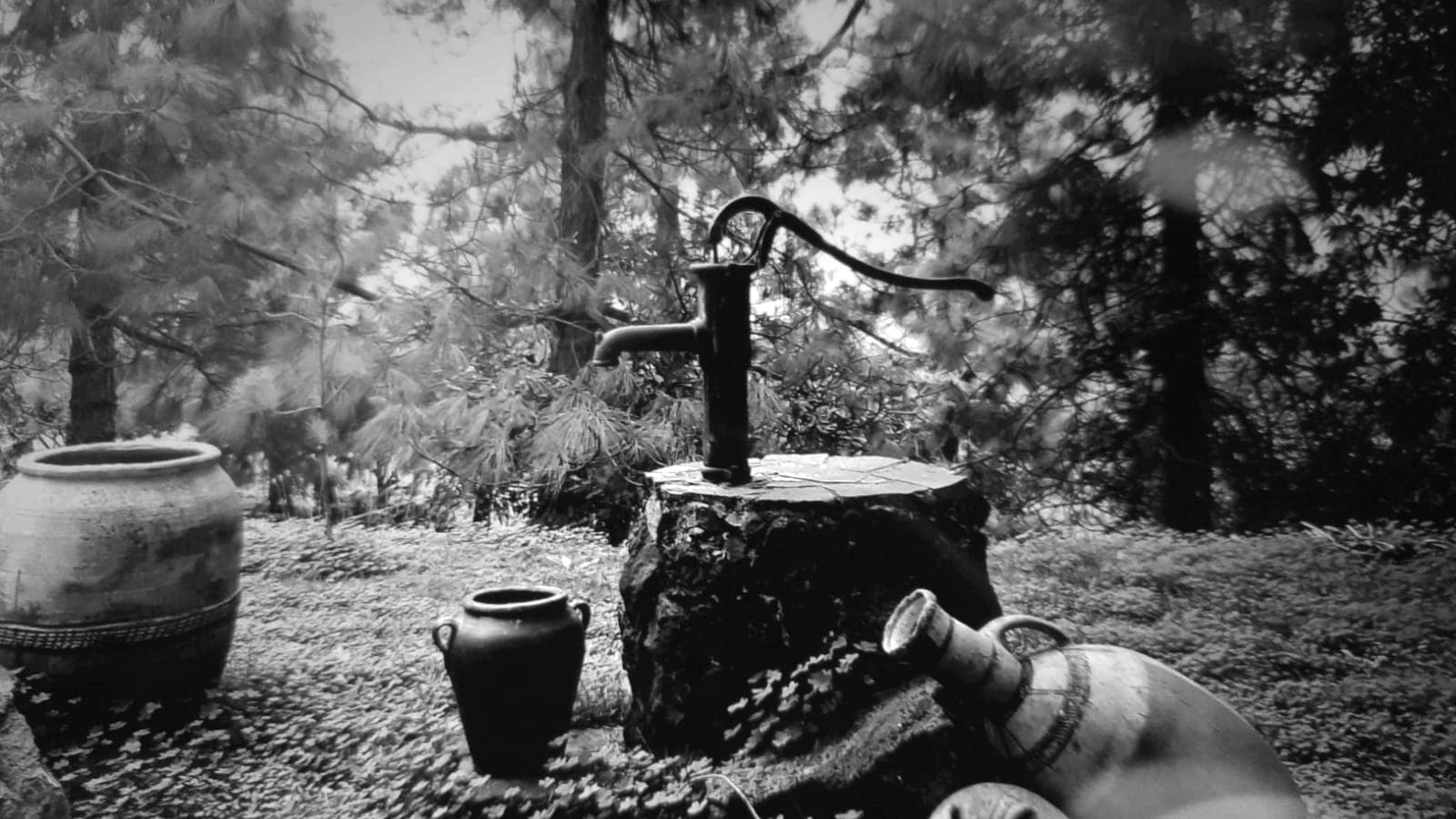
Manual cast-iron water pump on a stump, beside clay water jars, in sepia tones

The hand pump over the well

The hand water pump

A cast-iron lever pump, mounted over the old well and surrounded by clay water jars.

It was worked by hand, up and down, to raise the water that watered the vegetable garden.

Learn more about the the hand water pump
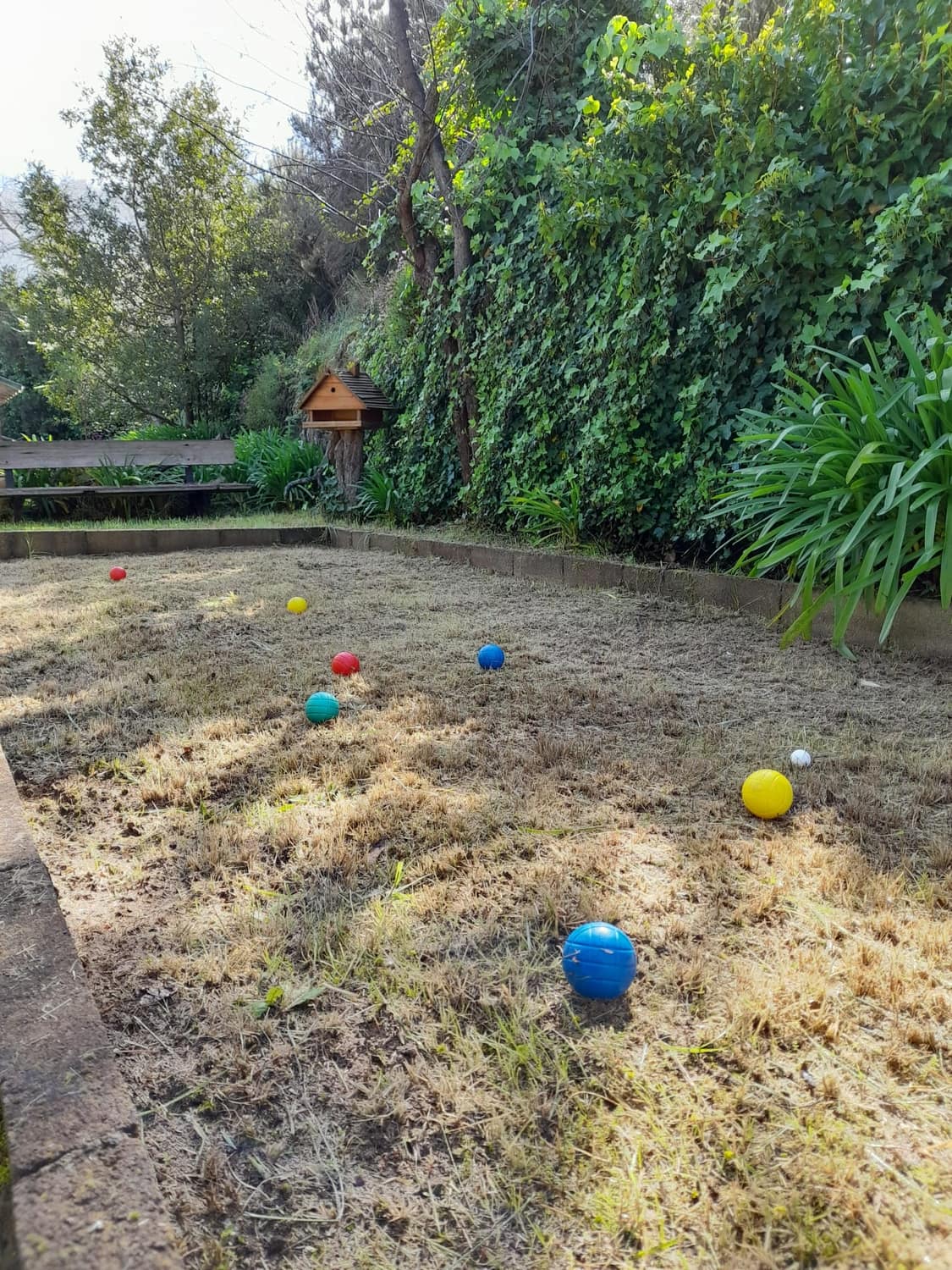
Colourful petanque boules on the earth court among Canary Island pines, with a birdhouse in the background

Boules and the shade of pines

The petanque court

A court carved out among Canary Island pines, with firm earth underfoot and shade that settles in by the late afternoon.

One of the corners Jose shows to guests who stay more than a couple of nights.

Learn more about the the petanque court

Featured flora

What grows on the estate.

  • Red tajinaste

    Echium wildpretii

    Endemic to the Canary Islands, a spike up to 3 m tall that flowers in spring.

  • Blue agapanthus

    Agapanthus africanus

    Spherical heads of deep blue in late spring and summer.

  • Hydrangea

    Hydrangea macrophylla

    Pink and blue along the stone wall at the entrance.

  • Canary Island pine

    Pinus canariensis

    Endemic to the Canary Islands. Needles in bundles of three, fire-resistant.

  • Banana plant

    Musa × paradisiaca

    The quintessential farming landscape of northern Tenerife.

  • Almond tree

    Prunus dulcis

    White-and-pink blossom between January and February. The threshing floor sits beneath one.

  • Dragon tree

    Dracaena draco

    Symbol of the Orotava Valley and of the Canary archipelago.

  • Small vineyard

    Vitis vinifera

    For the family's own use, not commercial.

During your stay

How to explore it during your stay.

The garden explores itself. There are no opening hours, no guided routes, no tickets. Each house opens directly onto the estate, and the path between the pool and the houses winds through the garden's corners.

If you are interested in the history, Jose will show you the seven ethnographic features and tell you how Montserrat replanted each area. If you would rather not see anyone, you won't see anyone, the houses are 50 m apart, set among woodland and fruit trees.

It is one of those places where calm comes of its own accord. You are in the middle of nature, with some of the best hikes in Las Cañadas and Mount Teide a stone's throw away.

Want to sleep inside the garden?

There are three independent houses, 50 m apart — La Era, El Castaño and Casa Azul. They share only the pool; everything else is yours.